Network configuration automation
Standardized, version-controlled builds for routing, switching, and firewall estates replace per-device manual configuration, so the tenth site is built to the same verified standard as the first.
Vertex Infrastructure Group configures, migrates, and verifies enterprise and carrier networks for federal programs — remotely, from the console outward. Standardized, reviewed builds replace per-device manual work, and every change arrives with the approval record and verification evidence a contracting officer asks for.
Request a capability briefing Capability statementDelivery scopes we hold as a subcontractor or teaming partner to prime contractors.
Standardized, version-controlled builds for routing, switching, and firewall estates replace per-device manual configuration, so the tenth site is built to the same verified standard as the first.
Discovery workbooks, inventories, and vendor exports parsed into a validated dataset that drives deployment. Errors surface before a change window, not during one.
Hardware refresh, circuit migration, and consolidation work planned as code with pre-checks, staged cutovers, and automatic rollback on failed verification.
Engineers reach customer environments through per-person authorization, with no customer credentials held on a workstation and no change reaching a live network without a named engineer's approval. Adding or removing a person is immediate and auditable.
Every deployment produces its approval record and verification results as an artifact — the backing detail for milestone acceptance and invoicing.
The prime's technicians or the customer's own staff handle hands-on work; Vertex owns the logical build, remote turn-up, cutover control, and verification. Remote hands get exact instructions, not a design problem to solve on site.
The same standardized process runs every engagement, and the result is the same on the last device as on the first.
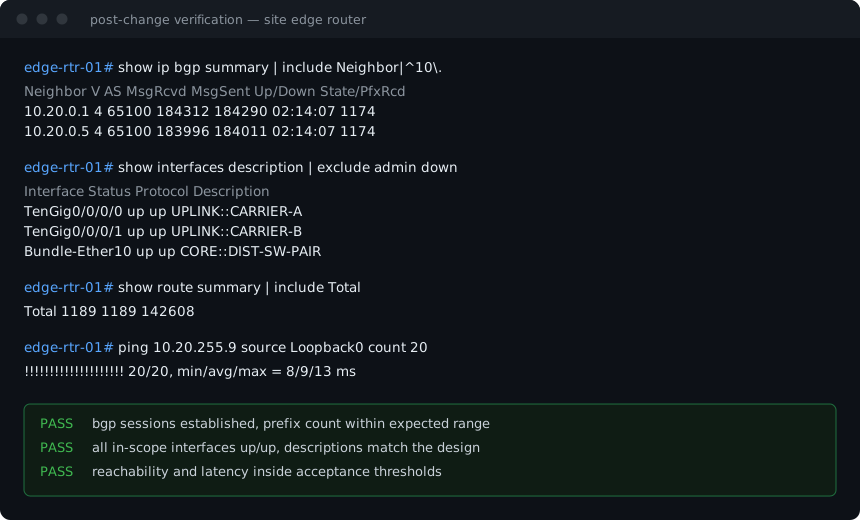
A detailed technical walkthrough is available to primes and contracting officers under a mutual non-disclosure agreement.
Program risk on network work is rarely the configuration. It is the things around it, and these are the ones we plan for before a schedule is signed.
Site records disagree with what is in the rack. We reconcile inventory, circuit IDs, and addressing against the devices themselves, and raise the deltas early, when they are a schedule conversation rather than an outage.
Console or cellular access is established and tested before a cutover, not improvised after a management path drops. Remote sites are the ones where this is skipped and where it costs a truck roll.
Every change window has stated success checks and an abort threshold agreed with the customer beforehand, so the decision to back out is made on evidence rather than in the middle of the night by whoever is on the bridge.
IP plans, VLAN assignments, and hostname standards are applied consistently across the estate. Inconsistency here is what makes later automation, monitoring, and audit impossible.
Power, rack space, cross-connects, circuit delivery, and escort access are confirmed before technicians travel. Most field cost overruns are a readiness failure, not a technical one.
As-builts, verification results, and approval records are captured with the work rather than reconstructed at closeout, which is what keeps milestone invoices from sitting.
One build standard, applied the same way on every device in the estate.
What a prime needs to know before adding a subcontractor to a proposal or a task order.